


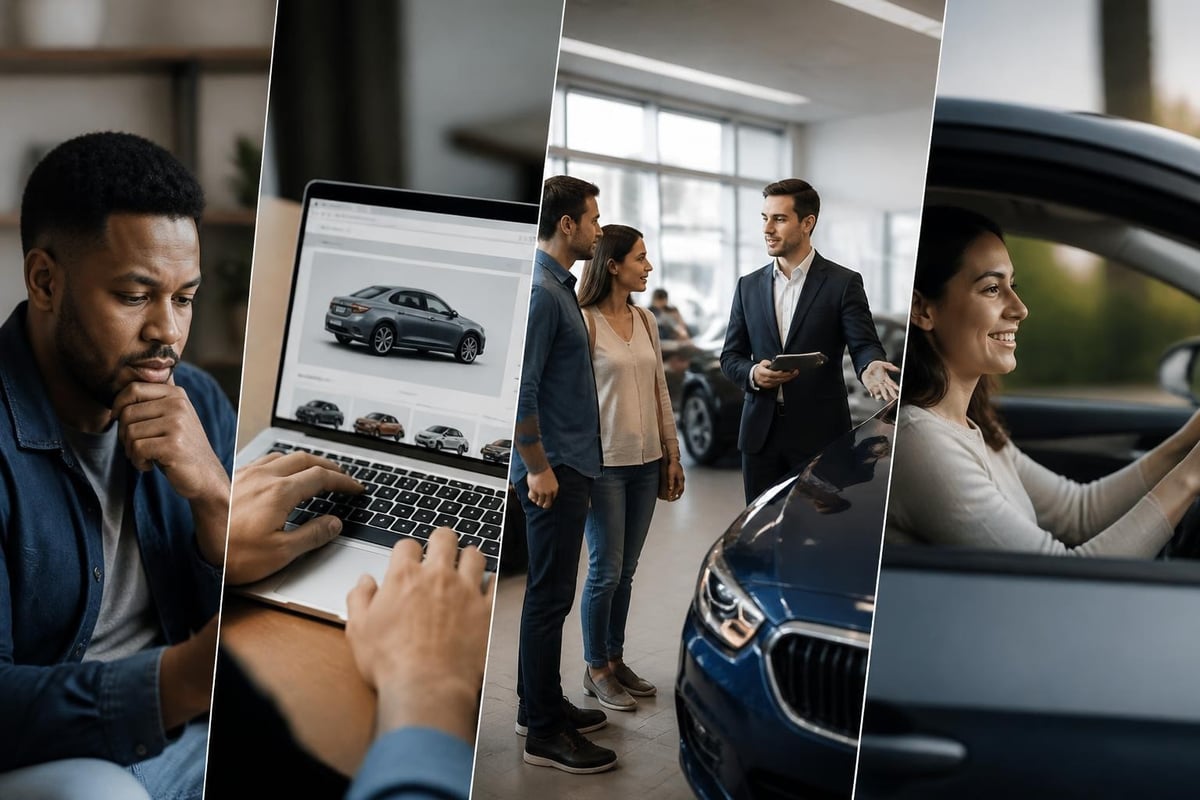
The automotive industry has undergone a fundamental transformation in how vehicles are marketed and sold. Today's car buyers spend an average of 14 hours researching online before stepping into a dealership, making automotive digital marketing the most critical component of successful vehicle sales strategies. Dealerships and manufacturers who master digital channels consistently outperform competitors in lead generation, customer engagement, and ultimately, sales conversions.
The Automotive Buyer Journey Has Gone Digital
Modern car shoppers no longer follow the traditional path of visiting multiple dealerships to compare options. According to Capital One’s 2025 Car Buying Outlook, 87% of buyers complete the majority of their research online before making contact with a dealer. This shift demands a comprehensive automotive digital marketing approach that meets customers where they spend their time.
The research phase now happens primarily on mobile devices. Pew Research data on internet use and smartphone ownership shows that 85% of Americans own smartphones, with 31% relying primarily on mobile for internet access. Your digital marketing must deliver seamless mobile experiences across every touchpoint.
Understanding the Multi-Channel Research Process
Today's automotive buyers engage with an average of 12 to 15 different digital touchpoints before making a purchase decision. They compare prices, read reviews, watch video walkthroughs, explore financing options, and evaluate trade-in values entirely online.
Key digital research channels include:
- Search engines for model comparisons and local inventory
- YouTube for vehicle reviews and feature demonstrations
- Social media for peer recommendations and dealer reputation
- Third-party automotive sites for pricing transparency
- Manufacturer websites for specifications and configurators
This complex journey requires coordinated messaging across all platforms to maintain consistent brand presence and trust throughout the decision-making process.
Search Engine Optimization for Automotive Inventory
Search visibility determines whether potential buyers find your inventory or your competitor's lot. Automotive digital marketing starts with robust SEO that captures high-intent searches at every stage of the buyer journey.
Local SEO drives foot traffic to physical dealerships. When someone searches "Ford F-150 dealer near me" or "certified pre-owned SUV [city name]," your dealership needs to appear in the top results. This requires optimized Google Business Profile listings, location-specific landing pages, and consistent NAP (name, address, phone) citations across directories.
Technical implementation matters enormously. Dealerships participating in Google's Vehicle Listings program must follow Google’s vehicle feed requirements to ensure inventory appears correctly in search results and Google Shopping. Proper schema markup, accurate VIN data, and regular feed updates determine whether your inventory gains visibility.
Content Strategy for Every Purchase Phase
Strategic content addresses specific questions at each stage of consideration. Early-stage shoppers search for comparisons ("sedan vs SUV fuel economy"), mid-stage buyers want model-specific details ("2026 Honda Accord safety features"), and late-stage prospects need transactional information ("best lease deals [model] [city]").
| Buyer Stage | Content Type | Example Topics |
|---|---|---|
| Awareness | Educational guides | Electric vs hybrid comparison, SUV towing capacity guide |
| Consideration | Model reviews | Trim level comparisons, feature breakdowns |
| Decision | Transactional | Lease calculator, trade-in valuation, financing options |
| Post-Purchase | Retention | Maintenance schedules, warranty information |
Businesses looking to strengthen their search presence across traditional and AI-powered platforms should explore comprehensive SEO, AEO & GEO Services that address the evolving search landscape where generative AI increasingly influences how buyers discover vehicles.
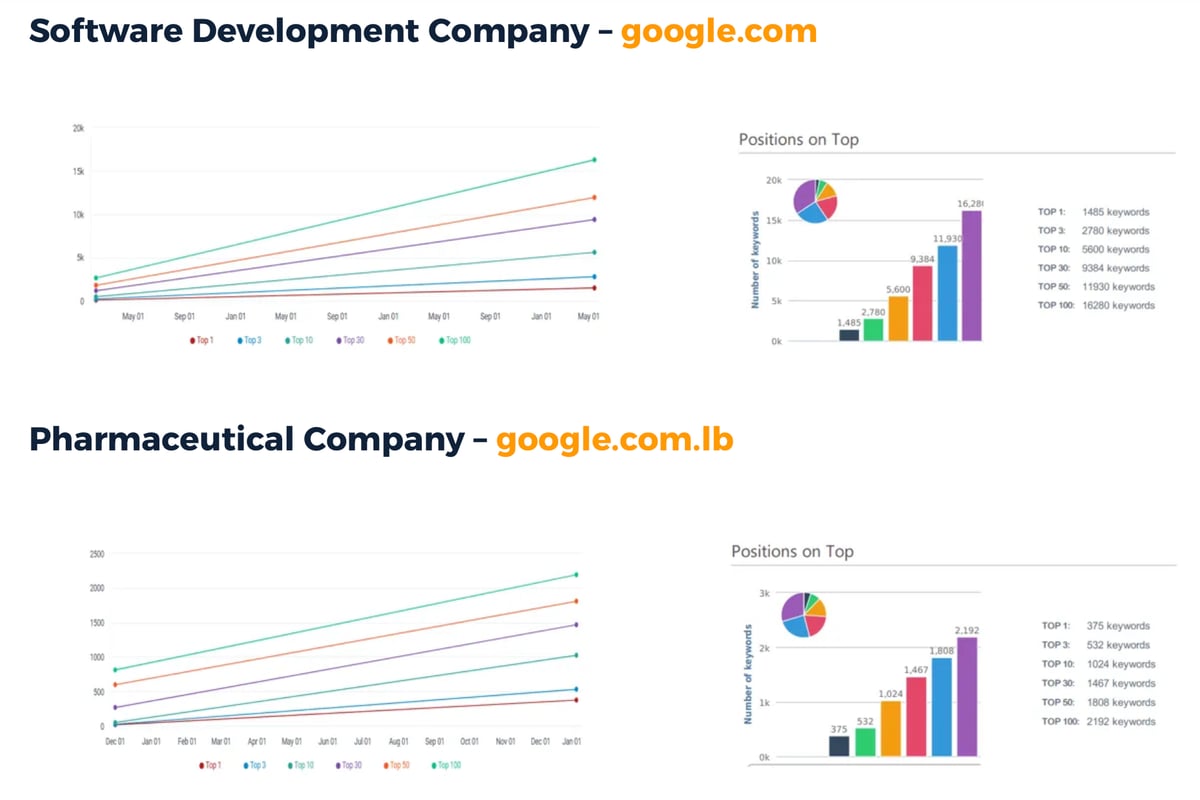
Your content must also optimize for Answer Engine Optimization (AEO) and Generative Engine Optimization (GEO), as AI-powered search platforms like ChatGPT, Perplexity, and Google's AI Overviews increasingly shape how buyers research vehicles in 2026.
Paid Advertising Strategies That Drive Showroom Traffic
Automotive digital marketing requires sophisticated paid media strategies that balance awareness campaigns with direct response advertising. NADA dealership financial data shows successful dealers allocate 60-70% of advertising budgets to digital channels, with the highest ROI coming from search and social advertising.
Search advertising captures bottom-funnel intent when buyers are ready to act. Campaigns targeting high-intent keywords ("new Silverado inventory [city]," "used Camry under $25k") generate qualified leads with clear purchase intent. The key lies in granular campaign structure with separate ad groups for each model, trim level, and buyer intent.
Effective search campaign structure:
- Brand campaigns protecting your dealership name
- Model-specific campaigns for each vehicle line
- Competitive campaigns targeting rival brand searchers
- Inventory campaigns for in-stock vehicles
- Service and parts campaigns for retention
Display and video advertising build awareness and maintain top-of-mind presence throughout extended research periods. Prospective buyers typically research for 30-90 days before purchasing, requiring sustained visibility across that timeline.
Social Media Advertising for Automotive Brands
Social platforms offer unmatched targeting precision for reaching qualified buyers. Facebook and Instagram advertising enables dealerships to target users by demographics, interests, life events (recent engagement, new job), and behaviors (automotive enthusiasts, luxury goods shoppers).
Video content performs exceptionally well for automotive advertising. IAB’s 2025 Digital Video Ad Spend report indicates that automotive advertisers increased video budgets by 34% year-over-year, with connected TV (CTV) emerging as a premium placement for brand campaigns.
TikTok has emerged as an unexpected powerhouse for automotive marketing, particularly for reaching younger buyers. Short-form video showcasing vehicle features, customer testimonials, and behind-the-scenes dealership content generates engagement rates 3-5x higher than traditional platforms.
Organizations seeking hands-on expertise in social advertising can benefit from structured training programs that cover platform-specific best practices and campaign optimization techniques.
Connected TV and Video Marketing Excellence
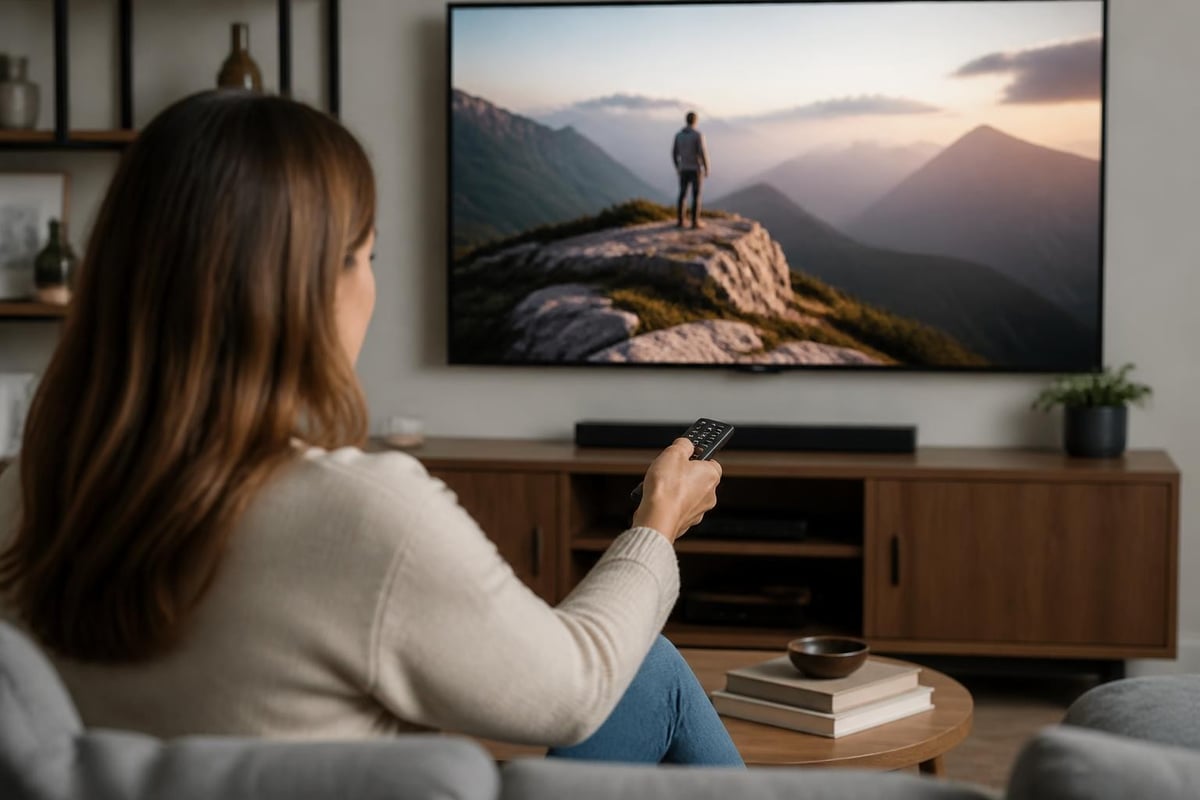
Connected TV advertising represents the fastest-growing channel in automotive digital marketing. IAB’s CTV ad format guidance provides critical standardization that enables automotive brands to deliver consistent experiences across streaming platforms.
CTV combines the visual storytelling power of television with the targeting precision of digital advertising. Dealerships can reach cord-cutters and streaming-first households that traditional broadcast advertising misses entirely.
CTV advertising advantages for automotive:
- Household-level targeting based on income, location, and purchase behavior
- Non-skippable placements ensuring message delivery
- Attribution tracking connecting ad exposure to website visits and dealership traffic
- Premium environment alongside professional content
YouTube remains the dominant video platform for automotive research. Vehicle review videos, comparison tests, and feature demonstrations accumulate millions of views from engaged shoppers actively researching purchases. Smart automotive digital marketing includes both organic YouTube content and paid pre-roll advertising targeting relevant audiences.
Marketing Automation and Lead Nurturing Systems
The extended automotive purchase cycle demands sophisticated lead nurturing. A prospect who fills out a form today might not be ready to buy for 60-90 days. Marketing automation ensures consistent communication throughout that timeline without overwhelming sales teams.
Automated workflows should segment leads based on behavior, preferences, and stage in the buying journey. Someone who downloaded a pricing guide receives different follow-up than someone who scheduled a test drive. Personalization drives engagement and conversion rates.
Essential automotive automation workflows:
- Welcome series for new email subscribers
- Abandoned inventory browser retargeting
- Trade-in estimate follow-up sequence
- Service reminder campaigns for existing customers
- Post-purchase satisfaction and review requests
Integration between your CRM, inventory management system, and marketing automation platform creates seamless experiences. When a vehicle a prospect viewed gets a price reduction, automated alerts notify interested parties immediately, creating urgency and driving action.
Analytics, Attribution, and ROI Measurement
Effective automotive digital marketing requires rigorous performance tracking across every channel and campaign. Without proper attribution, dealerships waste budget on underperforming tactics while underfunding proven winners.
Multi-touch attribution models provide accurate insights into which touchpoints contribute to conversions. The customer who clicks a Facebook ad, later searches your brand name, and eventually converts through a retargeting campaign was influenced by multiple interactions. Attribution modeling assigns appropriate credit to each touchpoint.
| Metric | Definition | Target Range |
|---|---|---|
| Cost Per Lead (CPL) | Ad spend divided by qualified leads | $25-$75 |
| Lead-to-Show Rate | Leads who visit dealership | 15-25% |
| Show-to-Close Rate | Visitors who purchase | 20-35% |
| Cost Per Sale (CPS) | Total marketing cost per vehicle sold | $400-$800 |
| Marketing ROI | Revenue generated per dollar spent | 5:1 to 10:1 |
Vehicle-level tracking connects marketing spend to actual sales. When you know that $3,500 in advertising generated 47 leads resulting in 8 vehicle sales worth $240,000 in gross profit, you can make informed budget decisions with confidence.
Kantar’s research on automotive pricing reveals that perceived value, not just sticker price, drives purchase decisions. Your analytics should track not just cost efficiency but message effectiveness and brand perception metrics.
Reputation Management and Review Strategy
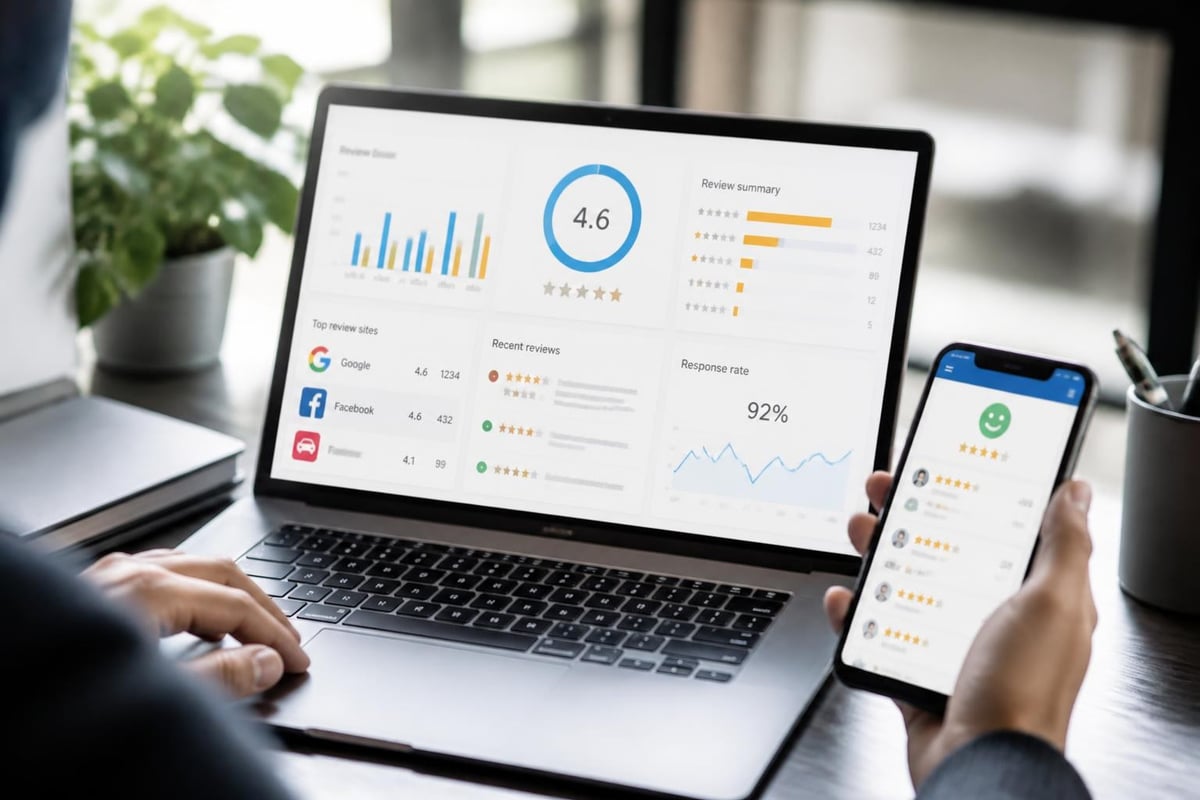
Online reputation directly impacts automotive digital marketing effectiveness. A dealership with 4.8 stars and 300+ Google reviews converts search traffic at dramatically higher rates than a competitor with 3.2 stars and sparse feedback.
Active reputation management includes monitoring review platforms, responding promptly to both positive and negative feedback, and systematically requesting reviews from satisfied customers. Automated post-purchase email campaigns asking for reviews generate consistent feedback flow.
Negative reviews require thoughtful, professional responses that demonstrate accountability and willingness to resolve issues. Public responses show future customers that you value satisfaction and stand behind your service, often mitigating damage from critical feedback.
Review generation best practices:
- Request reviews 3-7 days after vehicle delivery
- Make the process simple with direct links to review platforms
- Respond to every review within 24-48 hours
- Feature positive reviews in marketing materials
- Address patterns in negative feedback with operational improvements
Social proof extends beyond review platforms. Video testimonials, customer success stories, and user-generated content on social media build trust and credibility throughout the research process.
Data Privacy and Compliance Considerations
Automotive digital marketing must navigate increasingly complex privacy regulations. GDPR in Europe, CCPA in California, and emerging state-level privacy laws affect how dealerships collect, store, and use customer data for marketing purposes.
Consent management platforms ensure compliance while maintaining marketing effectiveness. Clear opt-in processes, transparent data usage policies, and easy opt-out mechanisms protect both customers and dealerships from regulatory penalties.
First-party data becomes increasingly valuable as third-party cookies phase out. Building direct relationships through email subscriptions, loyalty programs, and authenticated website experiences creates marketing assets that don't rely on external data sources.
Compliance checklist for automotive marketers:
- Cookie consent management on all digital properties
- Clear privacy policy accessible from every page
- Opt-in confirmation for email marketing lists
- Data retention policies that delete old customer information
- Staff training on privacy regulations and customer rights
The shift toward privacy-first marketing actually benefits dealerships willing to invest in direct customer relationships and first-party data collection strategies.
Emerging Technologies Reshaping Automotive Marketing
Artificial intelligence transforms automotive digital marketing through personalization, automation, and predictive analytics. AI-powered chatbots qualify leads 24/7, answering questions and scheduling test drives without human intervention. Machine learning algorithms optimize bid strategies, adjusting campaigns in real-time based on performance signals.
Augmented reality enables virtual vehicle customization and showroom experiences. Prospects explore different color options, wheel designs, and interior packages from their smartphones, increasing engagement and purchase confidence before visiting the dealership.
Voice search optimization matters increasingly as smart speakers and voice assistants handle more automotive research queries. Optimizing for conversational keywords and featured snippet positions ensures visibility when users ask "what's the best family SUV under $40,000?" or "where can I buy a used pickup truck near me?"
Programmatic advertising automates ad buying across display, video, and CTV channels. Real-time bidding ensures your ads reach qualified audiences at optimal times, with AI algorithms continuously learning and improving targeting precision. This efficiency drives down customer acquisition costs while increasing conversion rates.
Predictive analytics identify which leads have the highest purchase probability based on engagement patterns, demographic data, and behavioral signals. Sales teams prioritize follow-up efforts on prospects most likely to convert, improving close rates and shortening sales cycles.
Integration Across Digital and Physical Experiences
The most effective automotive digital marketing creates seamless transitions between online research and in-person experiences. QR codes in showrooms link to detailed spec sheets, virtual tours provide 360-degree interior views, and mobile apps streamline the finance and paperwork process.
Digital retailing platforms enable customers to complete entire transactions online, from trade-in valuation through financing approval and vehicle delivery scheduling. While many buyers still prefer in-person negotiations, offering digital options expands accessibility and convenience.
Omnichannel integration touchpoints:
- Online inventory browsing synced with in-store availability
- Saved vehicle configurations accessible across devices
- Sales representative assignment before showroom visit
- Pre-approved financing ready for in-person closing
- Digital document signing reducing paperwork time
The goal isn't replacing human interaction but removing friction points that frustrate buyers. Customers who complete preliminary steps online arrive at dealerships better informed, more committed, and ready to finalize purchases efficiently.
Building Long-Term Customer Value
Automotive digital marketing shouldn't end at vehicle delivery. The real profit opportunity lies in lifetime customer value through service retention, parts sales, and future vehicle purchases. Digital channels maintain relationships that generate recurring revenue.
Email marketing keeps service specials, maintenance reminders, and seasonal promotions in front of vehicle owners. Targeted campaigns based on purchase date and vehicle model ensure relevant messaging that drives service appointments.
Loyalty programs reward repeat customers with exclusive benefits, early access to new inventory, and referral incentives. Digital tracking makes program management seamless while providing valuable data on customer preferences and buying patterns.
Social media communities foster brand advocacy and peer recommendations. Active Facebook groups, Instagram engagement, and YouTube content create touchpoints beyond transactional relationships, building emotional connections that translate to long-term loyalty.
Conquest campaigns target owners of aging vehicles, using predictive analytics to identify customers likely entering the market for replacement vehicles. Timely outreach with trade-in valuations and upgrade incentives captures sales that might otherwise go to competitors.
Automotive digital marketing in 2026 requires sophisticated multi-channel strategies that address every stage of the extended buyer journey, from initial awareness through post-purchase retention. Success depends on integrating SEO, paid advertising, video content, marketing automation, and analytics into cohesive campaigns that drive measurable ROI. Whether you need comprehensive training to upskill your team, strategic consulting to optimize current efforts, or performance management to maximize campaign results, Intoact delivers practical expertise that translates directly into improved marketing outcomes and dealership growth.


