


The dental industry has transformed dramatically over the past decade, with patient acquisition shifting almost entirely to digital channels. Modern dental practices competing for patient attention must master digital marketing for dentists or risk losing market share to competitors who have embraced online strategies. Today's patients search for dentists on Google, read reviews before booking appointments, and engage with practices on social media before ever picking up the phone. Understanding how to leverage these digital touchpoints effectively separates thriving practices from those struggling to fill appointment slots.
Understanding the Digital Patient Journey
Today's dental patients follow a predictable digital path before scheduling their first appointment. They typically start with a Google search for terms like "dentist near me" or "emergency dental care," scan the local map pack results, read online reviews, visit practice websites, and compare options before making contact.
Research demonstrates that online information significantly influences patient decision-making. According to a peer-reviewed study analyzing patient choice factors, digital presence and online reputation play crucial roles in how patients select healthcare providers. This behavioral shift requires dental practices to establish strong visibility at every stage of the patient journey.
Mapping Digital Touchpoints
The typical patient journey includes multiple digital interactions:
- Search engine results and local map listings
- Practice website evaluation
- Online review platforms like Google Business Profile and Yelp
- Social media presence and engagement
- Email communications and appointment reminders
- Online booking systems and patient portals
Each touchpoint represents an opportunity to influence patient decisions through strategic digital marketing for dentists. Practices that optimize these interactions create seamless experiences that convert searchers into patients.

Local SEO: The Foundation of Dental Marketing
Local search engine optimization forms the cornerstone of effective digital marketing for dentists. When potential patients search for dental services, they overwhelmingly choose practices appearing in Google's local map pack-the top three results with map pins displayed prominently above organic listings.
Optimizing your Google Business Profile requires meticulous attention to several critical elements. Complete every profile section with accurate practice information, including exact address, phone number, website URL, hours of operation, and service categories. Upload high-quality photos of your office, staff, and treatment rooms regularly to keep the profile fresh and engaging.
Technical Local SEO Requirements
Beyond Google Business Profile optimization, technical elements significantly impact local search performance:
| Local SEO Factor | Implementation Priority | Impact Level |
|---|---|---|
| NAP Consistency | Critical | High |
| Schema Markup | High | Medium-High |
| Local Citations | Medium-High | Medium |
| Mobile Optimization | Critical | High |
| Page Load Speed | High | Medium-High |
| HTTPS Security | Critical | Medium |
NAP consistency (Name, Address, Phone number) across all online directories, citations, and platforms signals credibility to search engines. Even minor variations like "Street" versus "St." can dilute local ranking signals.
Implementing local business schema markup helps search engines understand your practice information clearly. Following Google’s official SEO Starter Guide ensures you build on solid technical foundations that support long-term visibility.
Review Management Strategy
Patient reviews directly influence both search rankings and conversion rates. The British Dental Journal research on online reviews highlights how testimonials shape patient perceptions while cautioning practices about review authenticity and management approaches.
Develop a systematic approach to generating authentic reviews. After successful appointments, send personalized follow-up messages thanking patients and providing direct links to your Google Business Profile. Train front-desk staff to mention reviews naturally during checkout conversations. Make the review process effortless by sending mobile-friendly links that reduce friction.
Responding to every review-positive and negative-demonstrates engagement and professionalism. Address negative feedback promptly with empathy, offering to resolve concerns offline while showing prospective patients your commitment to satisfaction.
Content Marketing That Attracts Patients
Strategic content creation establishes authority while addressing patient questions and concerns. Digital marketing for dentists succeeds when content directly answers the questions potential patients ask during their decision-making process.
High-Value Content Topics
Develop comprehensive content around these patient-focused themes:
- Common dental procedures explained (root canals, crowns, implants, orthodontics)
- Preventive care guidance (brushing techniques, flossing, diet impacts)
- Emergency dental situations (knocked-out teeth, severe pain, infections)
- Cosmetic dentistry options (whitening, veneers, smile makeovers)
- Insurance and payment information (accepted plans, financing options)
- Technology and comfort (digital X-rays, sedation dentistry, laser treatments)
Each piece should provide genuine value rather than serving as thinly veiled promotional material. Patients distinguish between helpful education and sales content instantly.
Blog posts targeting long-tail keywords like "what to expect during root canal treatment" or "how long do dental implants last" capture patients actively researching specific procedures. These informational searches represent high-intent traffic when patients move closer to booking appointments.
Video content performs exceptionally well for dental practices. Short educational videos explaining procedures, virtual office tours, and staff introductions build familiarity and trust before patients ever visit. Prospective patients appreciate seeing the dentist's demeanor and communication style beforehand.
Paid Advertising for Immediate Patient Acquisition
While organic strategies build sustainable long-term traffic, paid advertising delivers immediate visibility and patient flow. Digital marketing for dentists benefits tremendously from strategic pay-per-click campaigns targeting high-intent searches.
Google Ads campaigns focused on local service searches generate qualified leads efficiently. Target keywords indicating immediate need like "emergency dentist open now," "same day dental appointment," or "dentist accepting new patients." These searches signal ready-to-book prospects worth higher cost-per-click investments.
Campaign Structure Best Practices
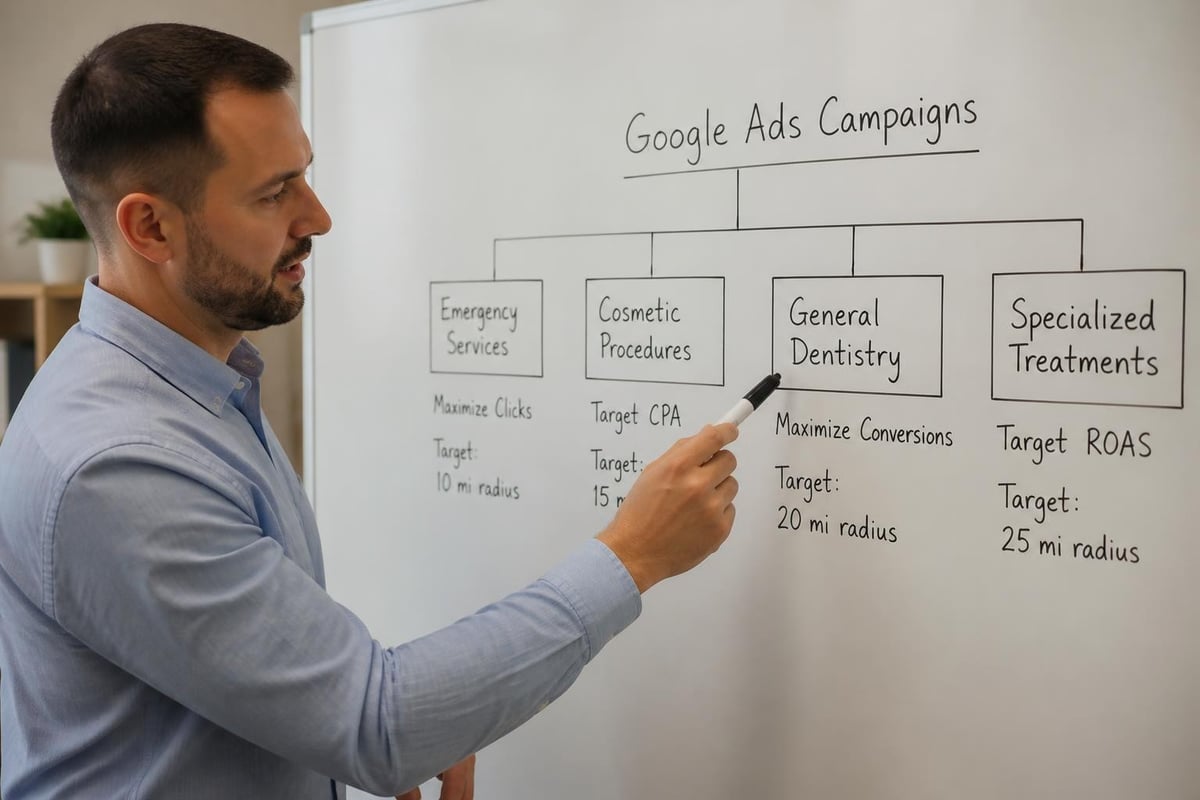
Organize campaigns by service type for precise budget allocation and performance tracking:
- Emergency Services (highest bids, 24/7 scheduling)
- Cosmetic Procedures (longer sales cycles, retargeting focus)
- General Dentistry (moderate bids, emphasis on convenience)
- Specialized Treatments (orthodontics, implants, periodontics)
Set geographic targeting precisely to your service area, avoiding wasted spend on searchers outside reasonable driving distance. Use radius targeting around your practice location, adjusting based on competition density and patient willingness to travel.
Landing page optimization dramatically impacts campaign ROI. Create dedicated landing pages for each service category rather than directing all traffic to your homepage. Include clear calls-to-action, online booking options, click-to-call buttons, and trust signals like credentials and reviews.
Social Media Advertising Opportunities
Meta platforms (Facebook and Instagram) offer powerful targeting capabilities for dental practices seeking to expand patient bases. Build audiences based on demographics, interests, behaviors, and geographic proximity to reach ideal patient profiles.
For practices looking to develop expertise in managing paid social campaigns effectively, structured training provides the framework for optimizing ad spend and improving conversion rates. The Meta & TikTok Ads Course delivers practical knowledge for creating, managing, and optimizing campaigns across these platforms with focus on measurable business outcomes.

Before-and-after imagery (with proper consent) showcases cosmetic dentistry results compellingly on visual platforms. Combine stunning visual content with targeting based on life events (engagements for wedding-ready smiles), age ranges (orthodontics for parents), and income brackets (cosmetic procedures for affluent demographics).
Email Marketing and Patient Retention
Acquiring new patients costs significantly more than retaining existing ones. Email marketing nurtures patient relationships while encouraging regular appointments and additional service adoption.
Build your email list through every patient interaction. Collect addresses during initial consultations, through website opt-in forms, and via online booking systems. Ensure compliance with Federal Trade Commission guidance regarding privacy and data security in all communications.
Email Campaign Types
| Campaign Type | Frequency | Primary Goal |
|---|---|---|
| Appointment Reminders | As needed | Reduce no-shows |
| Recall Notifications | Every 6 months | Schedule cleanings |
| Educational Content | Monthly | Build authority |
| Special Offers | Quarterly | Drive specific services |
| Birthday Greetings | Annually | Personal connection |
Automated appointment reminder sequences reduce no-shows substantially. Send confirmations immediately upon booking, reminders three days before appointments, and final reminders the day before with simple rescheduling options.
Recall campaigns targeting patients due for six-month cleanings maintain consistent appointment flow. Segment your list by last visit date and trigger automated sequences encouraging patients to schedule their next cleaning before issues develop.
Educational email newsletters position your practice as a trusted resource. Share oral health tips, announce new technologies or services, introduce new staff members, and highlight patient success stories (with permission). Balance promotional content with genuine value to maintain engagement.
Website Optimization and User Experience
Your practice website serves as your digital storefront, and first impressions form within milliseconds. Effective digital marketing for dentists requires websites that load quickly, display beautifully on mobile devices, and guide visitors effortlessly toward booking appointments.
Mobile optimization deserves top priority since the majority of local searches occur on smartphones. Implement responsive design ensuring your site adapts seamlessly to any screen size. Test extensively on various devices to identify and fix navigation issues, button sizes, and readability problems.
Essential Website Elements
Every dental practice website must include:
- Prominent phone number (click-to-call on mobile)
- Online booking integration (reduces friction dramatically)
- Clear service descriptions (what you offer, what to expect)
- Insurance information (accepted plans, financing options)
- About section (dentist credentials, staff introductions)
- Contact forms (with minimal required fields)
- Trust indicators (certifications, memberships, awards)
Page load speed directly impacts both user experience and search rankings. Compress images appropriately, leverage browser caching, minimize code, and use content delivery networks to achieve sub-three-second load times. Conducting regular SEO audits helps identify technical issues impacting performance.
Accessibility matters both ethically and practically. Implement proper heading hierarchy, add descriptive alt text to images, ensure sufficient color contrast, and enable keyboard navigation. These improvements help all users while signaling quality to search engines.
Social Media Presence and Engagement
Social media platforms offer dental practices opportunities to showcase personality, educate communities, and stay top-of-mind with existing and prospective patients. Strategic digital marketing for dentists includes consistent, valuable social media engagement rather than sporadic promotional posting.
Platform selection should align with your target demographics. Facebook reaches broad audiences across age groups and works well for community engagement and appointment reminders. Instagram appeals to younger demographics interested in cosmetic procedures through visual storytelling. LinkedIn helps establish professional credibility for practices targeting corporate partnerships or referral networks.
Content Mix Strategy
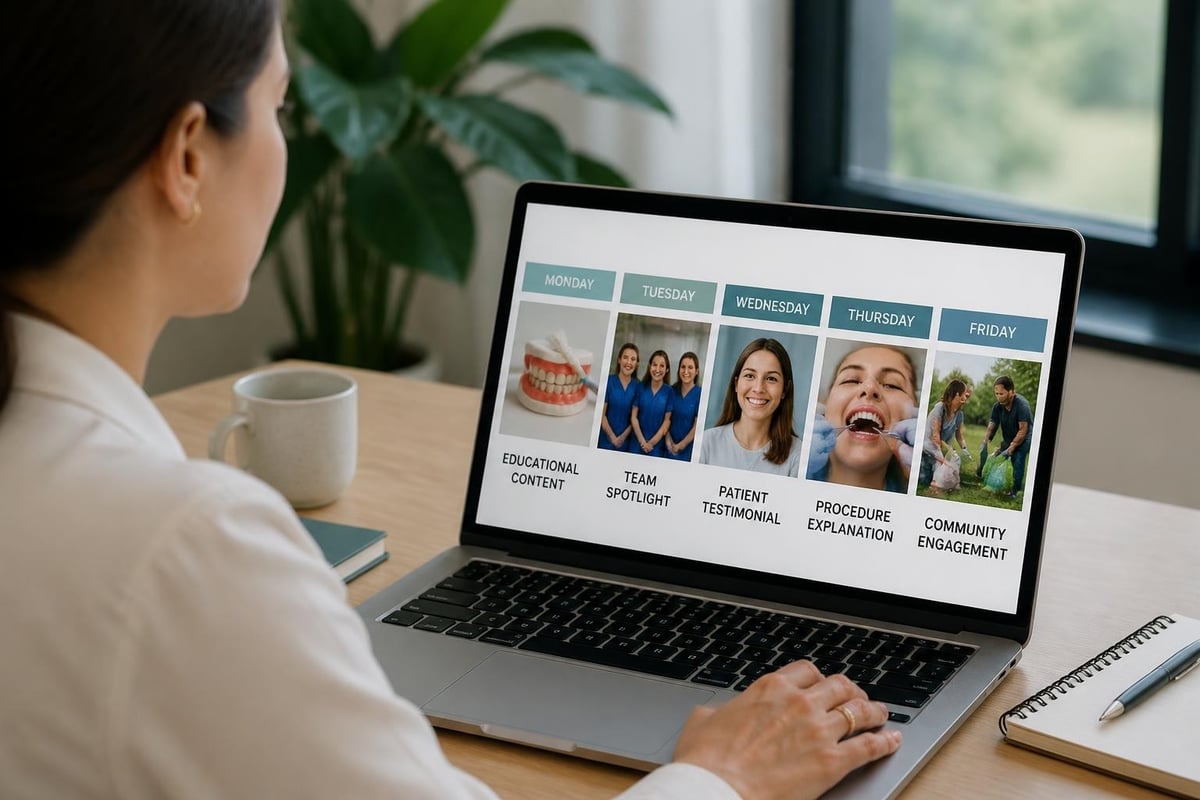
Balance your social media content across multiple categories:
- Educational posts (40%) – oral health tips, procedure explanations, myth-busting
- Behind-the-scenes content (25%) – team introductions, office culture, technology
- Patient testimonials (20%) – success stories, before-and-after transformations
- Practice updates (10%) – new services, extended hours, holiday schedules
- Community involvement (5%) – sponsorships, charity events, local partnerships
User-generated content builds authenticity powerfully. Encourage patients to share their positive experiences and tag your practice. Repost these testimonials (with permission) to demonstrate real patient satisfaction beyond curated marketing messages.
Engagement matters more than follower count. Respond promptly to comments and direct messages, answer questions thoroughly, and participate in community conversations beyond your own posts. This active presence builds relationships that convert followers into patients.
Compliance and Ethical Considerations
Digital marketing for dentists operates within regulatory frameworks protecting patient privacy and ensuring truthful advertising. Understanding these requirements prevents costly violations while maintaining professional integrity.
The American Dental Association provides comprehensive guidance on marketing and advertising ethics specific to dental practices. Review these resources regularly to ensure all marketing materials comply with professional standards.
Patient privacy protection must guide every marketing decision. Obtain explicit written consent before using patient photos, testimonials, or case details in any marketing materials. De-identify information appropriately and never share protected health information without proper authorization.
Marketing Claims Guidelines
When promoting services, maintain accuracy and avoid misleading statements:
- Support claims with evidence (avoid exaggerated success rates)
- Accurately represent credentials and specializations
- Clearly disclose material connections (sponsored content, affiliations)
- Avoid guaranteeing specific outcomes (healing varies individually)
- Include necessary disclaimers for before-and-after images
False or misleading advertising damages professional reputation and exposes practices to legal liability. Build marketing messages on verifiable facts and authentic patient experiences rather than hyperbolic promises.
Performance Tracking and Continuous Improvement
Measuring marketing effectiveness separates successful strategies from wasted budgets. Implementing comprehensive analytics reveals which channels drive patient acquisition most efficiently and where optimization opportunities exist.
Google Analytics provides foundational insights into website performance. Track key metrics including traffic sources, page views, bounce rates, session duration, and conversion events. Set up goal tracking for appointment bookings, contact form submissions, and phone calls to measure actual business outcomes rather than vanity metrics.
Key Performance Indicators
Monitor these essential metrics monthly:
| Metric | Target Range | What It Measures |
|---|---|---|
| Website Conversion Rate | 3-5% | Visitor-to-lead efficiency |
| Cost Per Lead | $30-$80 | Advertising efficiency |
| Patient Lifetime Value | $1,500-$3,000 | Long-term revenue potential |
| Organic Traffic Growth | 10-20% YoY | SEO effectiveness |
| Review Rating | 4.5+ stars | Reputation strength |
| Email Open Rate | 20-30% | Engagement quality |
Call tracking systems attribute phone appointments to specific marketing channels. Implement unique phone numbers for different campaigns (website, Google Ads, social media) to identify which sources generate the highest-quality patient calls.
Patient acquisition source tracking reveals ROI by channel. Ask every new patient how they found your practice during intake and record responses consistently. Over time, patterns emerge showing whether digital marketing for dentists delivers better returns than traditional methods.
Adapting to Industry Trends
The dental marketing landscape evolves constantly as patient behaviors shift and new technologies emerge. Staying current with tech and marketing trends positions practices to capitalize on emerging opportunities before competitors saturate new channels.
Voice search optimization grows increasingly important as smart speakers and voice assistants become ubiquitous. Optimize content for conversational queries like "Where can I find a dentist open on Saturday?" rather than traditional keyword phrases. Implement FAQ schema markup to increase chances of appearing in voice search results.
Artificial intelligence tools streamline content creation, patient communication, and campaign optimization. Explore AI-powered chatbots for after-hours website inquiries, automated appointment scheduling systems, and predictive analytics identifying patients likely to need specific services.
Video marketing continues gaining traction across all demographics. Short-form video content on platforms like TikTok and Instagram Reels reaches younger audiences effectively. Educational content explaining procedures or addressing common fears builds trust while showcasing your practice's personality and expertise.
Teledentistry expanded significantly during recent years and remains relevant for consultations, follow-ups, and emergency triage. Market virtual appointment options to attract patients valuing convenience or those with mobility challenges. Highlight this service in digital marketing materials to differentiate from competitors.
Building a Comprehensive Marketing Strategy
Successful digital marketing for dentists integrates multiple channels into cohesive strategies rather than treating tactics as isolated experiments. Alignment across all touchpoints creates consistent patient experiences that build trust and drive conversions.
Start with clear objectives tied to practice growth goals. Define specific targets like "acquire 20 new patients monthly" or "increase cosmetic procedure consultations by 30%" rather than vague aspirations. Measurable goals enable meaningful performance evaluation.
Allocate marketing budgets strategically across channels based on historical performance and growth objectives. New practices may invest heavily in paid advertising for immediate patient flow while established practices focus more on retention and reputation management. Typical dental practices allocate 3-5% of revenue to marketing, though growth-focused practices may invest 7-10%.
Monthly Marketing Checklist
Maintain consistency through systematic execution:
- Review and respond to all online reviews
- Publish 2-4 blog posts or articles
- Post 15-20 social media updates
- Send 1 educational email newsletter
- Analyze website and campaign metrics
- Update Google Business Profile with new photos
- Audit competitor digital presence
- Test landing page variations
- Optimize underperforming ad campaigns
- Document patient acquisition sources
Regular strategy reviews identify what's working and what needs adjustment. Schedule quarterly deep-dive sessions analyzing performance across all channels, comparing results to goals, and reallocating resources toward highest-performing tactics.
Professional expertise accelerates results while avoiding costly mistakes. Working with experienced digital marketing professionals provides access to advanced strategies, proven frameworks, and performance accountability. Organizations like Intoact specialize in helping businesses optimize digital marketing performance through training, consulting, and hands-on campaign management.
Digital marketing for dentists represents not just an opportunity but a necessity in 2026's competitive healthcare landscape. Practices that commit to comprehensive digital strategies-combining local SEO, content marketing, paid advertising, and patient engagement-position themselves for sustainable growth while those relying solely on referrals struggle to maintain patient flow. Whether you're looking to build internal expertise through specialized training or partner with experienced professionals for hands-on campaign management, Intoact delivers practical digital marketing solutions focused on measurable results and ROI across all channels.


