


Choosing the right saas content marketing agency can transform how software companies acquire customers, demonstrate value, and build market authority. In 2026, successful SaaS businesses recognize that content isn't just blog posts or social updates. It's a complete system connecting buyer education, search visibility, product adoption, and revenue growth through measurable, repeatable processes.
Why SaaS Companies Need Specialized Content Marketing Support
Software-as-a-Service businesses face unique marketing challenges that generic agencies often misunderstand. The subscription model requires continuous customer acquisition while reducing churn. Sales cycles involve multiple decision-makers researching solutions across weeks or months. Product complexity demands education before conversion.
A dedicated saas content marketing agency understands these dynamics. They build content programs addressing each funnel stage, from initial awareness through renewal and expansion. Unlike traditional B2C approaches, SaaS content marketing prioritizes demonstrating ROI, reducing friction in the buyer journey, and creating resources that support both marketing and customer success teams.
The Strategic Difference Between Generic and SaaS-Focused Agencies
Generic content agencies produce articles, videos, and social posts without connecting outputs to subscription metrics. They measure vanity metrics like page views or social shares rather than qualified pipeline, product signups, or customer lifetime value.
Specialized agencies deliver different outcomes:
- Content mapped to specific buyer personas and decision stages
- Integration with product analytics and customer data platforms
- Performance tracking tied to MRR, CAC payback, and expansion revenue
- Technical content requiring domain expertise in software categories
- Distribution strategies optimized for B2B channels and communities
The HubSpot B2B SaaS marketing guide highlights how top-performing software companies now align content directly with product-led growth strategies, creating resources that support self-service adoption while feeding sales conversations.
Core Components of Effective SaaS Content Programs
Building a content engine that drives measurable business results requires more than publishing frequency. It demands strategic architecture connecting topics, formats, and distribution to specific business objectives.
Topic Clusters and Search Visibility
Modern SaaS content strategy centers on topic clusters rather than isolated keywords. This approach creates hub pages targeting broad category terms, supported by cluster content addressing specific questions, use cases, and comparisons. The structure signals topical authority to search engines while guiding prospects through comprehensive education.

Your saas content marketing agency should implement structured data markup to enhance search appearance and support answer engine optimization. Google’s structured data documentation explains how proper implementation improves eligibility for featured snippets, knowledge panels, and AI-powered search results that increasingly influence B2B research.
For companies focusing on visibility across traditional and AI-powered search, SEO, AEO and GEO services address the complete spectrum from keyword rankings to generative engine citations.
Content Formats That Convert SaaS Buyers
Different buyer stages and personas require distinct content types. An effective agency produces a balanced mix supporting the complete customer journey.
| Content Type | Primary Purpose | Best For |
|---|---|---|
| Solution guides | Demonstrate category expertise | Early-stage awareness |
| Comparison articles | Support competitive evaluation | Mid-funnel consideration |
| Implementation tutorials | Reduce adoption friction | Post-sale activation |
| ROI calculators | Quantify business value | Late-stage justification |
| Customer stories | Provide social proof | All stages |
| Product documentation | Enable self-service success | Retention and expansion |
Bottom-funnel content often delivers disproportionate business impact. Comparison pages targeting "[your product] vs [competitor]" searches capture high-intent traffic. Implementation guides reduce time-to-value, directly impacting retention metrics.
The Semrush SaaS content marketing roadmap emphasizes how successful programs balance awareness content with conversion-optimized assets that directly influence pipeline quality and sales velocity.
Building a Performance-Driven Content Operations Model
Sustainable content marketing requires operational excellence, not just creative output. Leading agencies implement systems ensuring consistent quality, efficient production, and continuous optimization based on performance data.
Team Structure and Workflow Design
Effective saas content marketing agency teams combine specialized roles working through defined processes. Writers need category expertise or strong research skills to tackle technical topics credibly. SEO specialists ensure every asset targets valuable search opportunities. Editors maintain brand voice consistency and factual accuracy. Project managers orchestrate workflows preventing bottlenecks.
Workflow best practices include:
- Monthly content sprint planning aligned with campaign priorities
- Editorial calendars integrating product launches and market events
- Review cycles catching errors before publication
- Distribution checklists ensuring multi-channel amplification
- Performance reviews informing next-cycle priorities
The Content Marketing Institute’s content operations guide demonstrates how mature organizations implement governance frameworks, technology stacks, and measurement protocols that transform content from a cost center to a revenue driver.
Technology and Integration Requirements
Modern content marketing relies on integrated technology connecting creation, distribution, and measurement. Your agency should work within platforms tracking the complete content-to-revenue cycle.
Essential technology capabilities:
- Content management systems enabling SEO optimization and structured data
- Marketing automation connecting content engagement to lead scoring
- Analytics platforms measuring assisted conversions and multi-touch attribution
- Customer data platforms linking content consumption to product usage patterns
- Project management tools maintaining production velocity and quality standards
Integration matters more than individual tools. The best saas content marketing agency partnerships implement systems where content performance data flows directly into business intelligence platforms, enabling data-driven decisions about topic priorities, format investment, and channel optimization.

Measuring Content Marketing Success for SaaS
Vanity metrics don't fund content programs. Successful agencies demonstrate clear connections between content activities and business outcomes that CFOs and boards care about.
Essential Performance Metrics
Different stakeholders need different measurement lenses. Marketing teams track engagement and pipeline contribution. Product teams monitor activation and feature adoption. Finance teams evaluate CAC efficiency and payback periods.
Top-tier measurement frameworks include:
- Organic traffic to high-intent pages (product, pricing, comparison)
- Content-assisted pipeline value and conversion rates by funnel stage
- Customer acquisition cost for content-sourced leads versus other channels
- Time-to-value improvements driven by educational content
- Expansion revenue influenced by feature-education resources
- Branded search volume growth indicating category authority
The Ahrefs content marketing analytics guide provides frameworks for connecting content metrics to revenue outcomes, helping agencies prove ROI rather than just reporting activity.
Attribution and Multi-Touch Analysis
B2B SaaS buying journeys involve multiple content interactions before conversion. A prospect might discover your brand through a blog post, return for a comparison guide, attend a webinar, then request a demo. Understanding which content types influence different decision stages enables smarter investment allocation.
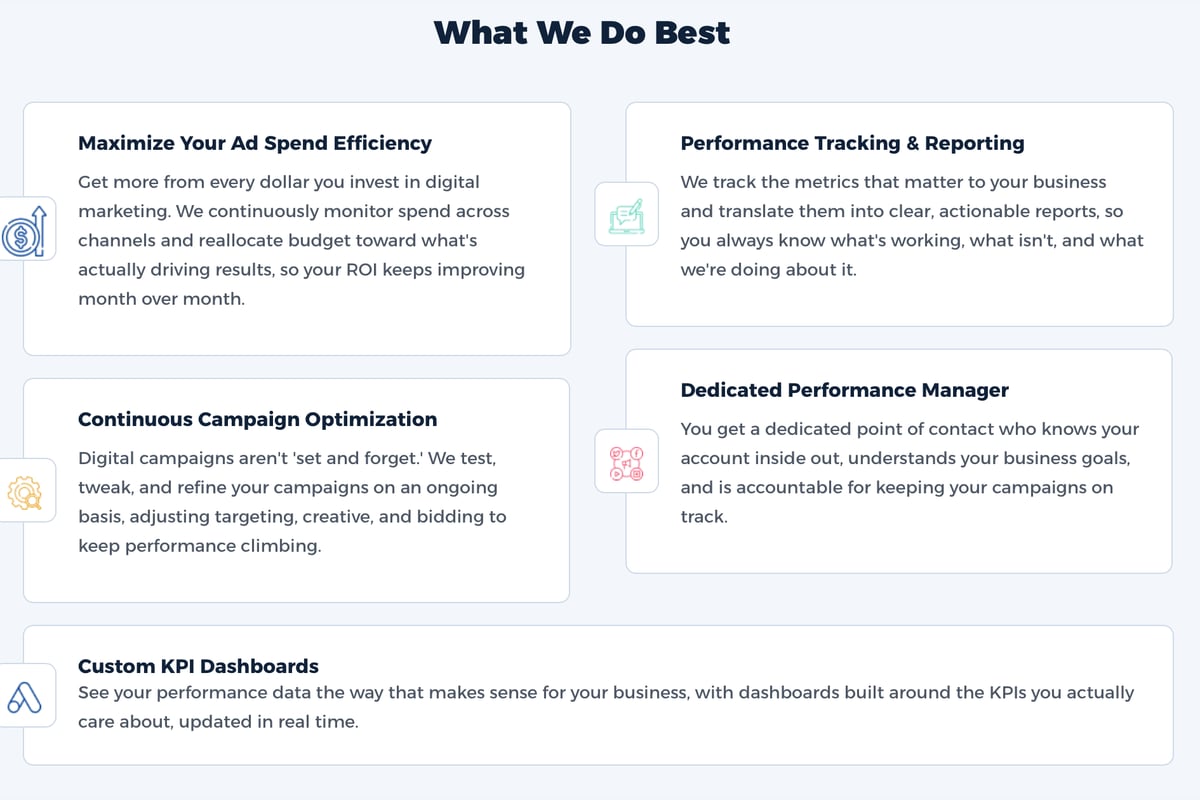
Leading agencies implement multi-touch attribution models tracking content influence across the complete journey. They analyze first-touch sources driving awareness, mid-funnel assists accelerating consideration, and last-touch assets closing deals. Digital Marketing Performance Management services help companies track, analyze, and optimize these complex attribution models to maximize marketing ROI.
Content Distribution Strategies for SaaS Growth
Publishing great content accomplishes nothing without strategic distribution. Top-performing saas content marketing agency teams spend as much effort promoting content as creating it.
Owned Channel Optimization
Your owned properties provide the foundation for content distribution. Blog infrastructure should support fast loading, mobile optimization, and frictionless conversion paths. Email nurture sequences deliver targeted content based on engagement patterns and firmographic data.
Owned channel best practices:
- Blog designs emphasizing content discoverability and internal linking
- Email segmentation based on product interest, company size, and funnel stage
- Website personalization showing relevant content to returning visitors
- Resource hubs organizing content by topic, role, and use case
- Conversion optimization testing CTAs, forms, and content gating strategies
Google’s helpful content guidance emphasizes creating resources that genuinely serve user needs rather than gaming algorithms. This philosophy should guide owned channel strategies.
Paid Amplification and Community Engagement
Organic distribution builds over time. Paid amplification accelerates results, targeting specific accounts or personas with high-value content. Social platforms like LinkedIn enable precise B2B targeting. Retargeting campaigns keep your content visible to engaged prospects.
Beyond owned and paid channels, community presence amplifies reach and builds authority. Contributing to industry forums, hosting webinars, partnering with complementary platforms, and engaging in relevant LinkedIn groups extends content visibility.
The CMI 2025 B2B content marketing trends research shows top performers invest heavily in owned community building, creating platforms where customers and prospects exchange knowledge while naturally discovering brand content.
Emerging Trends Reshaping SaaS Content Marketing in 2026
The content marketing landscape continues evolving rapidly. Agencies staying ahead of trends deliver competitive advantages for their SaaS clients.
AI-Powered Content Creation and Optimization
Artificial intelligence tools now support multiple content workflow stages. Research assistants identify trending topics and buyer questions. Writing tools accelerate first-draft creation. Optimization platforms suggest improvements for engagement and conversion. Analytics systems uncover performance patterns humans might miss.
Smart saas content marketing agency teams use AI to amplify human expertise, not replace it. Writers focus on strategic thinking, domain expertise, and brand voice while delegating research, outlining, and formatting tasks. Editors concentrate on accuracy, positioning, and persuasion rather than grammar and style basics.
Organizations investing in AI training for marketing teams gain competitive advantages by efficiently producing higher-quality content at greater volume while maintaining authentic expertise and brand differentiation.
Answer Engine Optimization and Generative AI Platforms
Beyond traditional search engines, AI-powered platforms like ChatGPT, Perplexity, and Google's AI Overviews now influence B2B research. Content optimized only for traditional SEO misses opportunities in these emerging channels.
Answer Engine Optimization (AEO) and Generative Engine Optimization (GEO) require different content approaches. Structured data markup becomes essential. Clear, concise answers to specific questions perform better than lengthy explorations. Citation-worthy expertise and authoritative sources increase the likelihood of AI platforms referencing your content.
| Traditional SEO Focus | AEO/GEO Focus |
|---|---|
| Keyword density and placement | Direct answer clarity |
| Backlink quantity | Source authority and credibility |
| Content length | Answer conciseness and structure |
| Page experience signals | Structured data implementation |
| Domain authority | Entity recognition and knowledge graphs |
Product-Led Content and Interactive Experiences
SaaS companies increasingly adopt product-led growth strategies where products sell themselves through trial experiences. Content marketing supports this shift by creating interactive resources demonstrating product value before signup.
Interactive calculators, assessment tools, comparison engines, and embedded demos let prospects experience value immediately. Educational content integrates directly into product interfaces, supporting self-service adoption and reducing support costs.
The most effective saas content marketing agency partnerships align content strategy with product roadmaps, creating resources that serve both acquisition and retention objectives while reducing the burden on customer success teams.
Selecting the Right SaaS Content Marketing Partner
Choosing an agency partner requires evaluating capabilities beyond writing quality and publishing frequency. The best relationships align strategic thinking, operational excellence, and business outcome focus.
Questions to Ask Prospective Agencies
Thorough vetting separates agencies delivering genuine business impact from those producing content without accountability.
Critical evaluation questions:
- How do you connect content performance to pipeline and revenue metrics?
- What SaaS category experience does your team bring?
- How do you stay current with search algorithm changes and AI platform evolution?
- What content operations systems ensure consistent quality and velocity?
- How do you balance awareness content with conversion-optimized assets?
- What role does original research and data play in your content strategy?
- How do you approach distribution beyond owned blog channels?
Review case studies demonstrating measurable business impact, not just traffic growth. Ask about attribution modeling, multi-touch analysis, and how they report ROI to executive stakeholders.
In-House, Agency, or Hybrid Models
Different organizational structures suit different business stages and capabilities. Early-stage startups often lack bandwidth for in-house content teams, making agency partnerships essential. Growth-stage companies might build hybrid models with strategic leadership in-house and production support from agencies. Enterprise SaaS organizations typically maintain substantial internal teams supplemented by specialized agency expertise.
The decision framework should consider budget availability, content volume requirements, category complexity, and strategic importance of content to overall go-to-market strategy. For companies building internal capabilities, corporate digital marketing and AI training accelerates team development while agency partnerships fill immediate execution gaps.
Avoiding Common SaaS Content Marketing Pitfalls
Even well-intentioned programs fail when agencies and clients make predictable mistakes. Awareness of common pitfalls enables proactive prevention.
Prioritizing Volume Over Strategic Value
Publishing frequency matters less than strategic relevance. Twenty mediocre blog posts create less business impact than five comprehensive resources addressing high-value buyer questions. The content treadmill exhausts teams without moving business metrics.
Focus content investment on topics directly connected to buyer pain points, competitive differentiation, and product value propositions. Research which questions prospects ask sales teams repeatedly, then create definitive resources addressing those topics comprehensively.
Neglecting Content Updates and Optimization
Publishing isn't the finish line. Content degrades over time as information becomes outdated, competitors improve their resources, and search algorithms evolve. The best saas content marketing agency teams implement systematic update schedules, refreshing high-value content quarterly or semi-annually.
Optimization extends beyond updates. Continuous testing of headlines, CTAs, content formats, and conversion paths identifies improvements driving incremental performance gains. Traffic analysis reveals which existing content deserves expansion into comprehensive pillar resources.
Ignoring Product and Customer Data
Content strategies built solely on keyword research miss critical insights. Product usage data reveals which features confuse users, indicating educational content needs. Customer success conversations uncover common objections and questions. Sales call recordings highlight competitive concerns requiring comparison content.
The most effective content programs integrate marketing, product, sales, and customer success data, creating resources addressing real business challenges rather than theoretical buyer interests.
Building a content marketing program that drives measurable SaaS growth requires specialized expertise, systematic operations, and relentless focus on business outcomes rather than activity metrics. The right agency partnership combines strategic thinking with execution excellence, creating content assets that support the complete customer journey from awareness through expansion. Whether you're building internal capabilities or seeking expert support, Intoact offers digital marketing training, AI courses, performance management, and consulting services designed to help businesses maximize ROI through data-driven marketing strategies and continuous optimization.


