


Choosing the right SEO and PPC agency can transform your digital marketing performance, but the decision requires more than comparing service lists. In 2026, businesses need partners who understand how organic and paid search work together, who can demonstrate measurable ROI, and who stay current with rapid changes in search algorithms and advertising platforms. The most effective agencies don't just run campaigns; they build integrated strategies that leverage data from both channels to maximize visibility and conversions.
Why Businesses Need an SEO and PPC Agency
Many companies manage SEO and PPC separately, often with different vendors or internal teams that rarely communicate. This siloed approach wastes budget and misses opportunities.
An integrated SEO and PPC agency delivers several advantages that separate vendors cannot match:
- Shared keyword intelligence from paid campaigns informs organic content strategy
- Faster testing cycles using PPC data to validate SEO opportunities before long-term investment
- Coordinated messaging across organic and paid results strengthens brand authority
- Unified reporting shows true search channel performance and attribution
When your agency controls both channels, they can shift budget dynamically based on what's working. If organic rankings drop temporarily due to an algorithm update, PPC coverage can increase. When SEO gains momentum for high-value terms, paid spend can focus on different funnel stages or competitive gaps.

Budget Allocation Between Channels
The right split between SEO and PPC depends on business stage, competitive landscape, and timeline. New businesses often need immediate visibility, making PPC essential while SEO builds momentum. Established brands with strong organic presence can reduce paid dependency.
Most agencies recommend this framework:
| Business Stage | SEO Budget % | PPC Budget % | Primary Goal |
|---|---|---|---|
| Launch (0-6 months) | 30% | 70% | Immediate traffic and validation |
| Growth (6-18 months) | 50% | 50% | Balanced expansion and testing |
| Established (18+ months) | 65% | 35% | Sustainable organic dominance |
| Seasonal/Event-driven | Variable | Variable | Flex to demand cycles |
These ratios shift based on industry competition. Legal services and finance typically require sustained PPC investment due to high-value conversions. E-commerce often tips toward SEO as product catalogs scale. According to HubSpot’s guide on aligning SEO & PPC, the highest-performing teams share data weekly and adjust spending monthly based on combined attribution.
Core Services in a Full-Service SEO and PPC Agency
A comprehensive SEO and PPC agency delivers more than basic optimization and ad management. The service portfolio should cover the entire search marketing ecosystem.
Technical SEO and Site Architecture
Technical foundation determines whether search engines can crawl, index, and rank your content properly. Agency teams audit site speed, mobile performance, schema markup, and internal linking. They identify crawl errors, duplicate content issues, and indexing problems that block organic growth.
Following Google’s SEO starter guide, technical audits should run quarterly at minimum. Sites making frequent changes need monthly reviews. The agency should provide clear implementation roadmaps with priority levels, not just lists of issues.
Keyword Research and Search Intent Mapping
Keyword strategy powers both SEO content and PPC targeting. Agencies analyze search volume, competition, commercial intent, and conversion probability. They map keywords to funnel stages: awareness, consideration, and decision.
Smart agencies use PPC data to accelerate SEO. Paid campaigns test keyword performance in days, revealing which terms actually convert before committing months to organic content development. This approach reduced wasted content investment by 40% in recent client work.
- High-intent commercial keywords: Immediate PPC focus, long-term SEO goal
- Informational keywords: SEO-first with retargeting PPC support
- Brand + competitor terms: Coordinated defensive and offensive strategy
- Long-tail variations: SEO content expansion, PPC phrase match testing
Content Strategy and Optimization
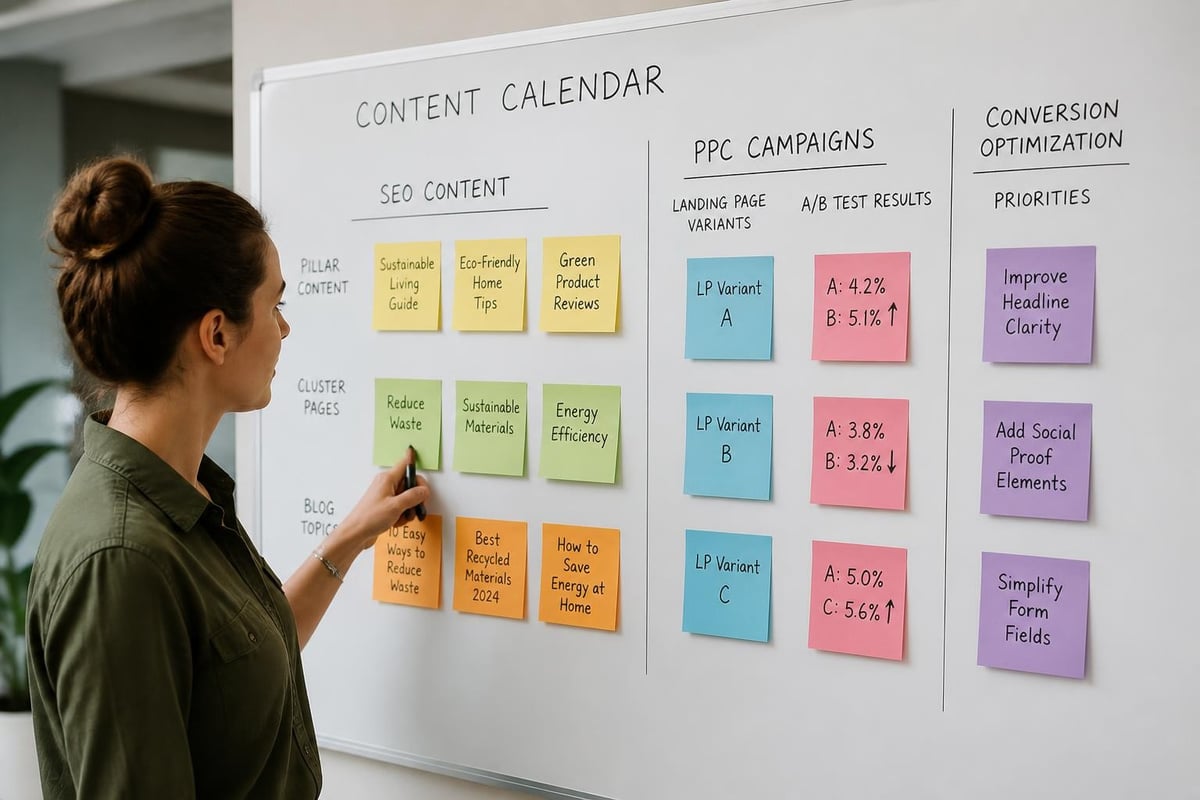
Content must satisfy user intent while supporting both organic rankings and paid landing page quality scores. Agencies develop content calendars aligned with keyword opportunities, seasonal trends, and business priorities.
For SEO, content targets topic clusters and answer-engine optimization. For PPC, landing pages focus on conversion elements: clear value propositions, trust signals, and friction-free forms. The same customer research informs both approaches, but execution differs.
Paid Search Campaign Management
PPC campaign structure, bidding strategy, and creative testing determine paid search ROI. Agencies build account architecture around business goals, not just keyword lists. They implement automated bidding where appropriate while maintaining manual control over strategic terms.
Quality Score directly impacts cost-per-click and ad position. According to Microsoft Advertising documentation, improving Quality Score from 5 to 8 can reduce CPC by 30% while improving average position. Agencies optimize ad relevance, landing page experience, and expected click-through rate to drive scores higher.
Performance Tracking and Analytics
Measurement separates professional agencies from order-takers. Proper tracking connects search activity to business outcomes: leads, sales, and revenue.
Agencies implement:
- Server-side tracking for accuracy beyond cookie-based analytics
- Multi-touch attribution to understand channel interaction
- Custom dashboards showing SEO and PPC performance side-by-side
- Cohort analysis revealing long-term customer value by acquisition channel
Monthly reporting should show trends, not just numbers. What changed, why it happened, and what action comes next matter more than vanity metrics.
How to Evaluate an SEO and PPC Agency
Not all agencies deliver equal results. Evaluation requires looking beyond case studies and testimonials to assess capabilities, processes, and cultural fit.
Experience and Specialization
Generalist agencies rarely excel at integrated search marketing. Look for teams with dedicated SEO and PPC specialists who collaborate regularly. Ask about team structure, certifications, and tool stack.
Industry specialization matters when compliance, sales cycles, or technical complexity demand specific knowledge. Healthcare, finance, and legal sectors benefit from agencies familiar with regulatory constraints and longer conversion paths.
Review their portfolio for clients at your scale. Agencies optimizing enterprise e-commerce platforms face different challenges than those serving local service businesses. The right experience level prevents costly learning curves on your budget.
Process and Communication
Clear processes indicate operational maturity. Ask prospective agencies to outline their onboarding sequence, monthly workflow, and escalation procedures.
Key process questions:
- How do you coordinate SEO and PPC team activities?
- What approval processes exist for budget changes or strategic pivots?
- How quickly do you respond to algorithm updates or platform changes?
- What happens if performance declines month-over-month?
Communication cadence matters as much as capability. Weekly check-ins work for aggressive growth campaigns. Monthly reviews suit maintenance-stage accounts. Quarterly strategy sessions keep long-term vision aligned. Mismatch between your needs and their standard rhythm creates friction.
Technology and Tools
Professional agencies invest in enterprise tools that individuals and small teams cannot afford. Comprehensive tool stacks include SEO platforms like Ahrefs or Semrush, PPC management software, rank tracking, and analytics.
Ask what tools they use and whether you'll retain access to data if the relationship ends. Some agencies hold keyword research and competitive intelligence hostage. Others provide full data portability.
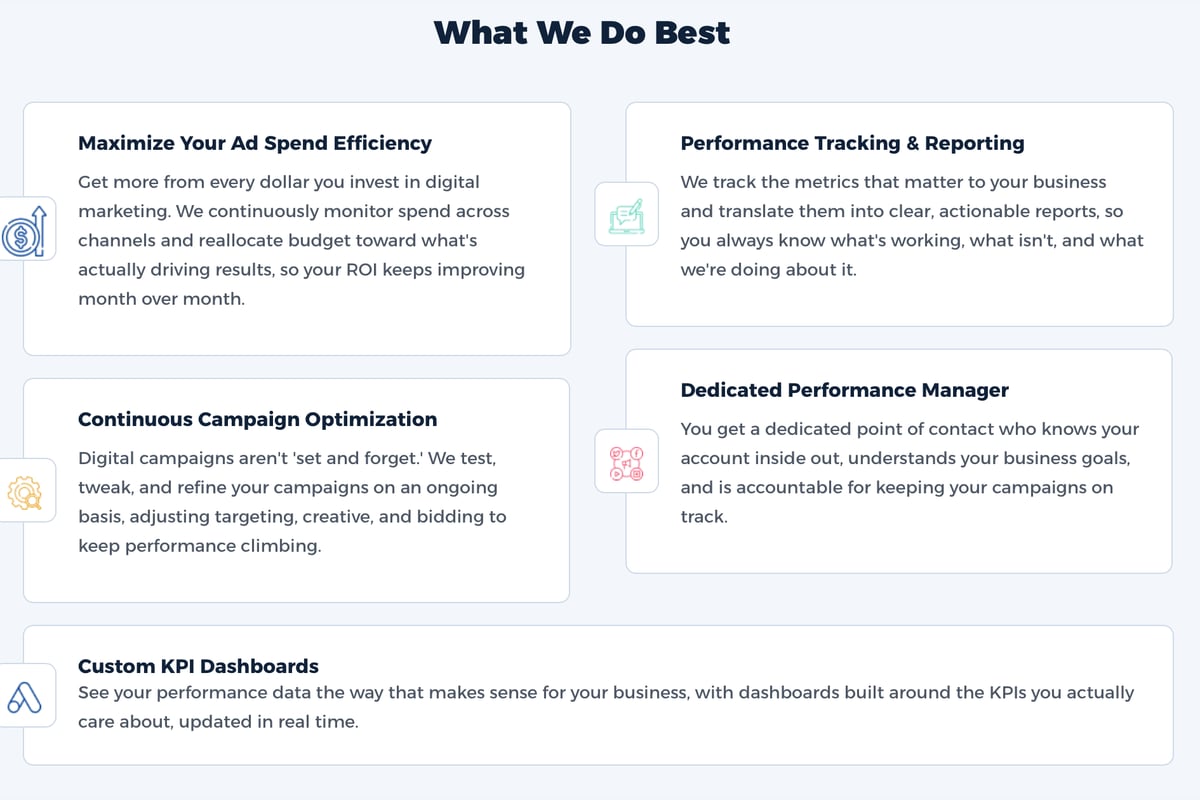
Intoact's approach combines advanced platforms with proprietary frameworks developed through years of managing campaigns across industries. Our Digital Marketing Performance Management service leverages these tools to track, optimize, and report on integrated search performance with full transparency and client access to all campaign data.
Pricing Models and Contracts
Agency pricing typically follows one of three models:
| Model | Structure | Best For | Watch For |
|---|---|---|---|
| Monthly Retainer | Fixed fee for defined scope | Ongoing partnerships, predictable budgets | Scope creep, unclear deliverables |
| Percentage of Spend | Fee based on ad budget (10-20%) | Large PPC budgets, scaled campaigns | Incentive to increase spend vs. efficiency |
| Performance-Based | Payment tied to KPIs or revenue | High-trust relationships, clear attribution | Unrealistic guarantees, misaligned metrics |
Many agencies combine models, charging retainers for SEO and percentage fees for PPC management. Negotiate based on your priorities and risk tolerance.
Contract length reflects confidence and commitment. Month-to-month arrangements offer flexibility but prevent long-term strategic planning. Annual contracts with quarterly review points balance commitment with accountability.
Measuring Success: KPIs for Integrated Search Marketing
Effective measurement requires tracking both channel-specific metrics and combined business outcomes. Your SEO and PPC agency should report on layered KPIs that show tactical execution and strategic impact.
SEO Performance Metrics
Organic search success builds over months, not days. Track leading indicators that predict future ranking improvements alongside lagging indicators that show realized traffic and conversions.
Leading indicators:
- Indexed pages and crawl efficiency
- Backlink acquisition rate and domain authority growth
- Keyword ranking improvements (positions 11-20 moving into top 10)
- Content publication velocity and topical coverage expansion
Lagging indicators:
- Organic traffic volume and trend
- Rankings for target keywords in positions 1-3
- Organic conversion rate and revenue attribution
- Branded search volume growth
Compare year-over-year performance to account for seasonality. Month-over-month changes reveal tactics working or failing. Week-over-week monitoring catches algorithm update impacts early.
PPC Performance Metrics
Paid search delivers immediate feedback. Daily monitoring identifies issues before they consume significant budget. Weekly reviews optimize toward efficiency. Monthly analysis guides strategic decisions.
Campaign health metrics:
- Impression share and lost opportunity due to budget or rank
- Quality Score distribution across ad groups
- Click-through rate by match type and device
- Conversion rate by keyword theme and landing page variant
Business impact metrics:
- Cost per acquisition (CPA) by campaign and channel
- Return on ad spend (ROAS) for e-commerce or revenue-tracked conversions
- Customer lifetime value by acquisition keyword
- Incremental revenue contribution vs. branded search baseline
Tinuiti’s Digital Ads Benchmark Report provides industry-level performance data to contextualize your results. Retail CPC averages differ significantly from B2B software, so compare against relevant benchmarks.
Combined Attribution Analysis
The most valuable analysis examines how SEO and PPC work together. Users rarely convert on first touch. They research organically, click paid ads, return through direct traffic, and finally convert.
Multi-touch attribution models reveal this complexity:
- First-touch credits the initial interaction (often organic)
- Last-touch credits the final click (often paid)
- Linear distributes credit equally across all touchpoints
- Time-decay gives more credit to recent interactions
- Position-based emphasizes first and last touch with some middle attribution
No single model tells the complete story. Review multiple attribution lenses to understand channel interaction. Many businesses discover that organic SEO builds initial awareness while PPC closes deals, or vice versa. This insight prevents cutting budgets from channels that appear low-performing in last-click models but drive essential early-funnel engagement.
Trends Shaping SEO and PPC Agency Work in 2026
The search marketing landscape evolves constantly. Agencies that adapt to emerging trends deliver better results than those running 2024 playbooks in 2026.
AI-Powered Search and Answer Engines
Traditional search results pages share space with AI-generated answers, featured snippets, and knowledge panels. Answer Engine Optimization (AEO) and Generative Engine Optimization (GEO) extend beyond classic SEO to ensure your content surfaces in AI-summarized responses.
Agencies now optimize for:
- Structured data markup that AI can easily parse and cite
- Concise, authoritative answers to common questions in your niche
- Entity relationships that help AI understand your brand's expertise and offerings
- Multi-format content including video, podcasts, and interactive tools that AI platforms reference
Companies focused exclusively on traditional search rankings miss opportunities in ChatGPT, Perplexity, and other answer engines where customers increasingly start research. Intoact's SEO, AEO & GEO Services address this expanded landscape, optimizing visibility across conventional search engines and AI-powered platforms.
Automation and Machine Learning in PPC
Manual bid management and keyword expansion have largely given way to automated strategies. Google's Performance Max and Microsoft's automated bidding use machine learning to optimize toward conversion goals.
Smart agencies leverage automation while maintaining strategic control. They set clear conversion tracking, provide high-quality creative assets, and guide algorithms with audience signals. According to Search Engine Journal’s PPC Trends 2025 report, agencies embracing automation with strong governance achieve 25-40% efficiency gains compared to purely manual management.
The skill shifts from tactical execution to strategic direction: defining the right conversion actions, testing creative variations, and interpreting performance data to guide algorithmic learning.
Privacy Changes and First-Party Data
Third-party cookie deprecation and privacy regulations (GDPR, CCPA) restrict targeting and tracking. Agencies help clients build first-party data assets through email capture, account creation, and customer data platforms.
SEO gains relative importance as organic traffic arrives without tracking dependencies. PPC adapts through contextual targeting, first-party audience segments, and server-side conversion APIs that work within privacy frameworks.
Successful agencies implement:
- Enhanced conversion tracking using first-party customer data
- Customer match audiences built from CRM systems
- Contextual keyword targeting rather than behavioral tracking
- Incrementality testing to measure true campaign impact beyond tracked conversions
Video and Visual Search
Search extends beyond text. YouTube represents the second-largest search engine. Visual search through Google Lens and Pinterest grows annually. Voice search through smart speakers and mobile assistants shifts query patterns.
Agencies incorporate video SEO, image optimization, and conversational keyword strategies. They create content that answers "how-to" searches with video tutorials, optimize product images for visual search, and target question-based queries matching voice search patterns.
According to the ACSI Search & Social Media Study, user satisfaction with visual and voice search continues improving, driving adoption higher each year. Agencies ignoring these formats leave traffic on the table.
Building a Successful Agency Partnership
Hiring an SEO and PPC agency begins a relationship, not a transaction. The most successful partnerships share common characteristics that maximize results and minimize friction.
Set Clear Expectations and Goals
Define success metrics before campaigns launch. Revenue targets, lead volume, market share goals, or brand awareness KPIs should be specific, measurable, and time-bound.
Document what the agency controls (strategy, execution, optimization) and what remains your responsibility (product quality, sales process, customer service). Misalignment on ownership creates conflict when results disappoint.
Establish realistic timelines. SEO typically requires 3-6 months to show significant ranking improvements. PPC delivers faster feedback but needs 4-8 weeks to gather statistically significant conversion data. Quarterly goal reviews allow course correction without constant strategy whiplash.
Provide Access and Information
Agencies perform best when they understand your business deeply. Share competitive intelligence, customer feedback, sales objections, and product roadmaps. The more context they have, the better they align campaigns with business reality.
Grant necessary access to:
- Analytics platforms showing user behavior and conversion paths
- Ad accounts for full transparency and emergency response capability
- Content management systems enabling technical SEO implementations
- CRM systems supporting audience building and attribution analysis
Some businesses hesitate sharing data, fearing vendor lock-in or competitive intelligence leaks. Choose agencies with strong confidentiality practices and plan for data portability from the start.
Collaborate on Strategy, Don't Micromanage Tactics
You hired experts for their knowledge and experience. Provide input on business priorities, budget constraints, and risk tolerance. Then let them execute.
Regular strategy discussions keep everyone aligned. Weekly tactical debates about keyword bids or meta descriptions waste time and prevent agencies from doing their job. Find the right balance between engagement and interference.
Ask questions when you don't understand recommendations. Push back when suggestions conflict with brand values or business realities. But avoid overriding agency expertise based on personal preference or outdated information.
Plan for Long-Term Growth
The best results come from sustained effort, not campaign-hopping. Plan multi-quarter roadmaps that build on each phase's learnings.
Year one often focuses on foundation: technical SEO cleanup, account structure, baseline performance. Year two emphasizes expansion: new content themes, additional platforms, geographic or product line growth. Year three optimizes: efficiency improvements, advanced segmentation, competitive dominance.
Agencies retain institutional knowledge over time. They learn your customer language, seasonal patterns, and organizational quirks. This accumulated insight compounds returns. Frequent agency changes reset that learning curve repeatedly.
Common Mistakes When Working With an SEO and PPC Agency
Even well-intentioned partnerships encounter pitfalls. Awareness of common mistakes helps avoid them.
Judging SEO success too quickly. Rankings and traffic build momentum over months. Evaluating SEO campaigns in the first 30-60 days leads to premature strategy abandonment. Give tactics time to work before declaring failure.
Ignoring technical prerequisites. No amount of agency brilliance overcomes a slow, broken website. If your site loads slowly, fails on mobile, or blocks crawlers, fix those issues first. Agencies can identify problems but implementation depends on your development resources.
Focusing only on traffic, not conversions. High traffic with low conversions wastes budget. Ensure landing pages, offers, and user experience support conversion before scaling acquisition. Agencies drive visitors; your site must convert them.
Separating SEO and PPC teams. If you engage an SEO and PPC agency but keep teams siloed internally, you lose integration benefits. Create communication channels between agency specialists and your internal stakeholders.
Changing strategy constantly. Algorithm updates, competitor moves, and new platform features will tempt you to pivot frequently. Resist the urge. Stick with sound strategies long enough to measure impact before chasing the next trend.
A capable SEO and PPC agency delivers more than traffic-it builds sustainable competitive advantage through integrated search strategies that drive measurable business outcomes. Whether you need advanced technical optimization, sophisticated campaign management, or strategic guidance to align organic and paid efforts, partnering with experts who understand both channels accelerates growth while avoiding costly mistakes. Intoact combines deep search marketing expertise with performance management, advanced SEO services, and practical training to help businesses maximize their digital marketing ROI across every channel.


